Welham Jones
https://welhamjones.co.uk/wp-content/themes/welham-jones/img/logos/supersonic-playground-logo.png
300
80
Welham Jones
How can I find out if someone has passed?
When someone dies, there is no single central register that the public can search to confirm a death or find funeral details. Instead, information is usually shared at the discretion of the family.
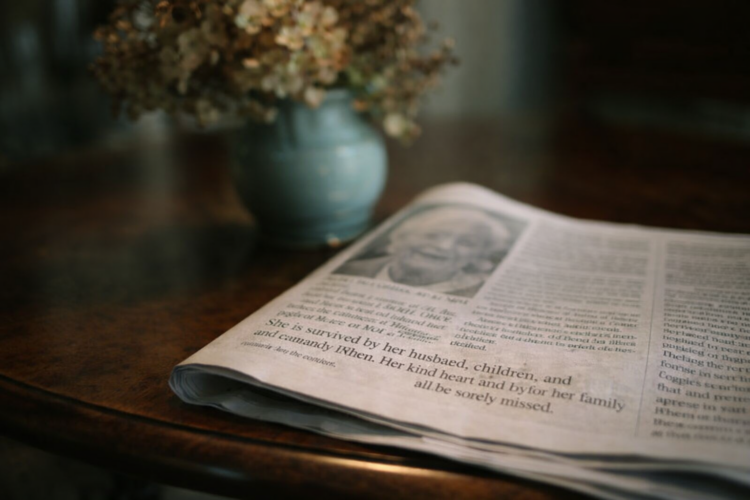
In many cases, you may receive a death notice or see an obituary published in a local newspaper or online. These notices often include the person’s name, age, date of death and, sometimes, funeral details. However, it is important to know that publishing a notice is not a legal requirement, and some families choose to keep arrangements private.
Therefore, families may decide not to make details public for many reasons, including privacy, emotional strain, or because the funeral will be small or invitation-only. This means that even if you search online or in local papers, there may be no publicly available information.
If you believe a funeral is being arranged and you were close to the person, it can be appropriate to contact a family member directly or speak to a local funeral director who may be able to offer general guidance, while still respecting confidentiality.
What is the difference between a death notice or an obituary?
Although the terms are often used interchangeably, death notices and obituaries serve different purposes.
A death notice is usually a short announcement confirming that someone has died. It typically includes basic details such as the person’s name, date of death and sometimes the funeral date, time and location. Death notices are often placed by the family or funeral director and are primarily informational.
An obituary, by contrast, is more personal, usually including a short life story, key achievements, family relationships and reflections on the person’s character. Funeral details may or may not be included.
Both notices are optional, and families may choose one, both, or neither. The absence of a notice does not mean a funeral is not taking place; it simply reflects the family’s wishes.
Where are obituaries posted?
Obituaries and death notices may appear in a range of places, depending on what the family prefers.
Common locations include local newspapers, community magazines, parish newsletters, and online notice boards. In recent years, many families have chosen dedicated online platforms, which make it easier for people to search nationally or leave messages of condolence.
Well-used UK resources include:
- Co-op Funeralcare have their own Tributes section
These websites allow you to search by name or location and may include funeral details, donation information, or tributes from family and friends. However, listings only appear if the family has chosen to publish them.
Welham Jones Funeral Directors’ experience with obituaries
At Welham Jones, we understand that every family is different. Some wish to share funeral details widely so that friends, neighbours and colleagues can attend, while others prefer a quieter, more private farewell.
We always work in line with the family’s wishes. If requested, we are happy to help publish a death notice or obituary on an appropriate online resource, ensuring the wording is respectful and accurate. If a family chooses not to publish anything publicly, we fully support that decision.
As independent, family-run funeral directors serving communities including Sevenoaks, Tonbridge, Tunbridge Wells, Swanley, Borough Green, Orpington and Chelsfield, and Chislehurst and Bromley, we are familiar with local customs and can advise sensitively on what is most appropriate.
Finding funeral details can feel difficult, but understanding how and where information is shared can help you navigate the process with clarity and respect.