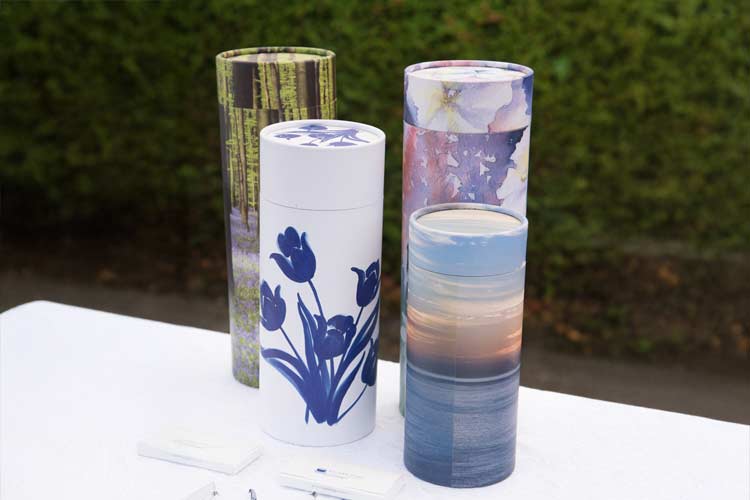
Urn selection in Tunbridge Wells means choosing a suitable container for ashes after a cremation. The urn you choose depends on whether the ashes will be kept at home, buried, scattered, or shared between family members. There is no legal time limit in England for making this decision. [1]
Many families take time before choosing an urn. Ashes can be kept safely while you consider the options.
Quick answers about urn selection in Tunbridge Wells
What is urn selection in Tunbridge Wells?
Urn selection is the process of choosing a container for ashes after cremation.
Do families need to choose an urn straight away?
No. Ashes are usually returned in a temporary container.
Can ashes be kept at home in Tunbridge Wells?
Yes. There is no law that prevents this.
Are there rules for scattering ashes locally?
Yes. Permission is usually required from the landowner.
Can ashes be buried in Tunbridge Wells?
Yes. Cemeteries and churchyards often allow this, but rules vary.
When do families need to choose an urn?
Families do not need to choose an urn immediately after a cremation. Ashes are usually provided in a temporary container, giving time to think about what to do next. Some families decide quickly. Others take weeks or months. [1]
This flexibility can make decisions feel less overwhelming.
What types of urns are commonly chosen in Tunbridge Wells?
Families in Tunbridge Wells usually choose from three main types of urns. Each type suits a different plan for the ashes.
What are traditional urns used for?
Traditional urns are used when ashes will be kept at home or buried. These urns are made from materials such as wood, ceramic, stone, or metal.
They are often chosen when:
- ashes will be kept in the home
- ashes will be buried in a cemetery or churchyard
- a permanent container is preferred
Some burial grounds require ashes to be placed in a suitable urn or casket. Requirements vary by site. [2]
What are keepsake urns?
Keepsake urns are small containers designed to hold a portion of ashes. They are often used when ashes are shared between close family members.
Keepsake urns are commonly chosen when:
- family members live in different areas
- a small amount of ashes is kept after scattering
- personal remembrance is important
There is no restriction on dividing ashes in England. [3]
What are biodegradable urns used for?
Biodegradable urns are used for scattering or burial in natural settings. These urns are designed to break down naturally over time.
They are often used when ashes will be:
- scattered
- buried in a churchyard
- placed in a natural or woodland setting
Permission is usually required before scattering ashes, even when a biodegradable urn is used.
Are there local rules for scattering ashes in Tunbridge Wells?
Yes, scattering ashes in Tunbridge Wells usually requires permission from the landowner. Public parks, churchyards, private land, and open spaces each have their own rules.
Checking permission in advance helps avoid distress later.
Where are ashes collected after cremation in Tunbridge Wells?
Many families in Tunbridge Wells attend cremations at Kent & Sussex Crematorium. After the service, ashes are provided in a temporary container unless other arrangements are made. [4]
This allows families time to decide on urn selection without pressure.
Can ashes be buried in cemeteries near Tunbridge Wells?
Yes, many cemeteries near Tunbridge Wells allow ashes to be buried. Each cemetery sets its own rules, including whether ashes must be placed in an urn or casket. [2]
It is helpful to check these rules before choosing an urn.
Can ashes be buried in churchyards in Tunbridge Wells?
Many Church of England churchyards allow ashes to be buried or placed in a designated area. Permission from the parish is required. Some churches prefer biodegradable or simple containers. [6]
What should families consider before choosing an urn?
Before choosing an urn, families often think about:
- where the ashes will be kept
- whether ashes will be shared
- local cemetery or church guidance
- whether personal details will be added
There is no need to decide everything at once. Ashes can be kept safely while options are discussed. [1]
Support from a local funeral director in Tunbridge Wells
Families choosing urns often want clear guidance from someone local. A family-run funeral director in Tunbridge Wells can explain options calmly and help with local arrangements.
You can find more information about the Tunbridge Wells funeral home and how local support is provided here.
Find us here.
Urn selection is often linked with other decisions. You may find these local pages helpful:
Each of these services is available locally and can be discussed at your own pace.
Author and local expertise
This page has been prepared by the team at Welham Jones Funerals & Memorials, a family-run funeral director serving Tunbridge Wells and the surrounding area.
With over 25 years of experience, the team supports families with cremation arrangements, urn selection, memorial planning, and aftercare. Content is reviewed to reflect current government guidance and local practice.
References
[1] “After a Death,” GOV.UK, https://www.gov.uk/after-a-death
[2] “Cremation Ashes and Scattering,” GOV.UK, https://www.gov.uk/cremation-ashes-scattering
[3] “Cremation Guidance,” GOV.UK, https://www.gov.uk/after-a-death/cremation
[4] “After the Service,” Kent & Sussex Crematorium, https://www.kentandsussexcrematorium.com/our-services/crematorium/after-the-service/
[6] “After the Funeral,” Church of England, https://www.churchofengland.org/life-events/funerals/after-funeral