Welham Jones
https://welhamjones.co.uk/wp-content/themes/welham-jones/img/logos/supersonic-playground-logo.png
300
80
Welham Jones
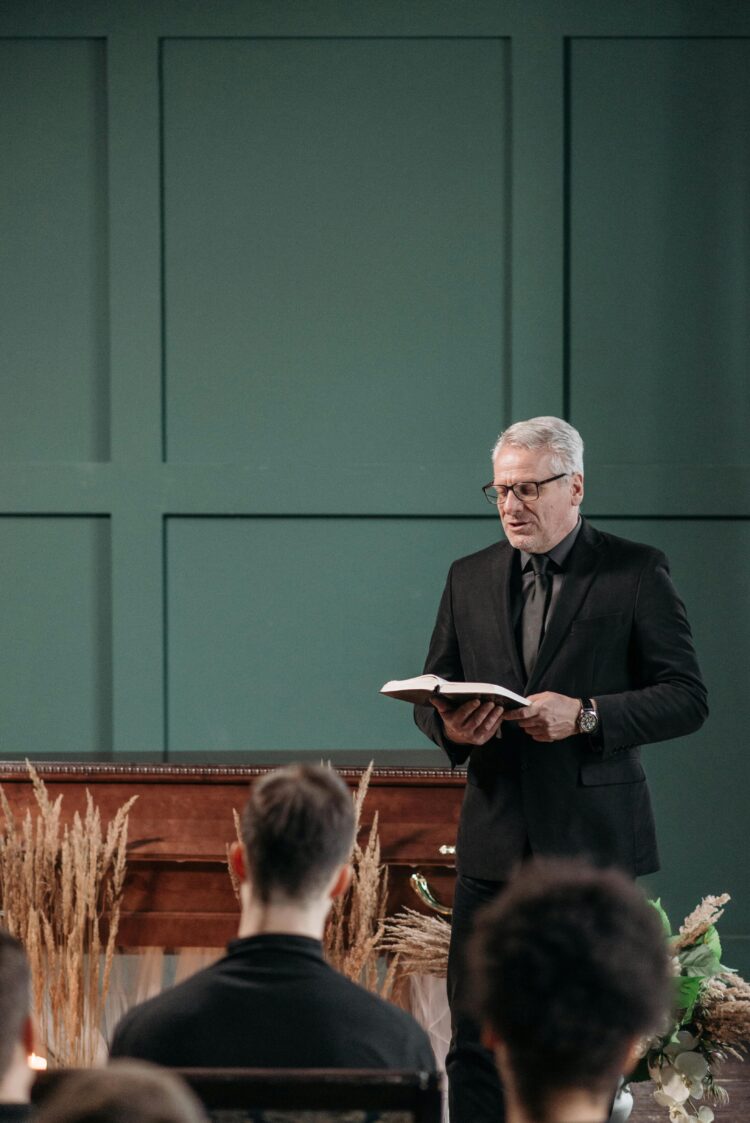
Why do we have eulogies? And where did this tradition come from?
The word “eulogy” comes from the Latin eulogium, derived from the Greek eu (“good” or “well”) and logia (“speaking”). Loosely translated, it means “speaking well”, and while people or places can be eulogised, today the word most often refers to a speech in praise of someone who has died.
The tradition dates back thousands of years. In ancient Mesopotamia, funeral dirges were inscribed on clay tablets as early as 2000 BCE. In ancient Egypt, priests and family members delivered ornate orations during elaborate funeral rites. And in ancient Greece, funeral orations were so important that leaders like Pericles became renowned for them.
Through history, eulogies have been a way to:
- Honour the deceased and their achievements
- Comfort those left behind
- Reinforce cultural values and shared identity
While styles have evolved; modern eulogies may include humour, personal anecdotes, or even multimedia tributes, the purpose remains the same: to acknowledge a life and the impact it had on others.
Who normally gives the eulogy?
A eulogy is usually delivered by someone who had a close and meaningful relationship with the deceased. This could be:
- A family member — spouse, child, parent, sibling or grandchild
- A close friend who shared significant moments with them
- A colleague or community member, particularly if the person played a prominent role locally
- The service leader, such as a vicar, priest, funeral celebrant or funeral director
Sometimes, more than one person may speak, offering different perspectives. As experienced funeral arrangers in Sevenoaks, Tonbridge, Tunbridge Wells and across the southeast, we often guide families through this decision, helping them choose the right person or people to share those memories.
What do I need to cover in a eulogy?
There is no single “correct” way to write a eulogy. As a rough guide, many fall around the 3–5 minute mark, however, this is not always the case: Charles Spencer’s eulogy for princess Diana – often hailed as a great example of a eulogy – was around 9 minutes, while Bindi Irwin, still very young when she commemorated her father, Steve, managed to move the assembled mourners with just 90 seconds.
For some, who are not fans of public speaking or worry about getting through such an emotional speech, 35 minutes feels like a lifetime, while for others it seems hardly enough time to remember a life loved. However, no matter how you feel about delivering a eulogy, believe that the best ones are able to find a theme and focus on it. We have noticed four distinct categories, which may help you to get started:
- Sentimental: heartfelt stories and memories, often light-hearted and uplifting, celebrating the person’s passions and character.
- Anecdotal: one powerful story that encapsulates who they were.
- Biographical: a more formal account of their life, achievements and legacy, often given by someone less personally close.
- Mixed: blending sentiment, anecdotes and biographical detail.
The choice often depends on your relationship with the person, the tone of the funeral, and how they would want to be remembered.
5 tips to write a great eulogy
1. Talk with other loved ones
Starting is often the hardest part. Speak with friends and family. Someone else’s memory or phrase might spark a memory, highlight a theme, or provide the perfect starting point. Here are a few prompts that may help you:
-
- What words would you use to describe them?
-
- What’s your favourite memory?
-
- If you were to speak to them one last time, what would you say?
-
- Which of their qualities do you see in me and other loved ones?
-
- How do you think they would want to be remembered?
- What do you think they would say was their greatest achievement?
2. Forget the crowd – speak to your loved one
Imagine your loved one is in the room. How would you normally talk to them? This can make the tone more natural and personal. From here, it is often a lot easier to narrow down:
-
- How formal you want your eulogy.
-
- How long the eulogy should be.
-
- The topics that you want to cover.
3. Practise aloud
Reading it out will help you check the flow and prepare for the emotion of the moment.
4. Time yourself
Words on a page can be deceiving: three minutes written may be much longer spoken, especially when emotions are heightened, and there is nothing worse than worrying about timings during a loving goodbye.
5. Speak from the heart
You don’t have to be a writer to write a eulogy. Many feel the pressure to suddenly get poetic, agonising over metaphors and similes in a way that is unnatural to them. And, while choosing a few lines of meaningful poetry or a song lyric from a shared memory can be a great addition; we promise that the thing that makes your eulogy moving, is you. A heartfelt speech written in your own words is far more than a speech written with the ‘right’ ones.
A great eulogy doesn’t have to be perfect, it just has to be true.