Welham Jones
https://welhamjones.co.uk/wp-content/themes/welham-jones/img/logos/supersonic-playground-logo.png
300
80
Welham Jones
The first 30 minutes
When the final words have been spoken, and the curtains close, or you quietly leave the chapel, you may wonder: what happens next?
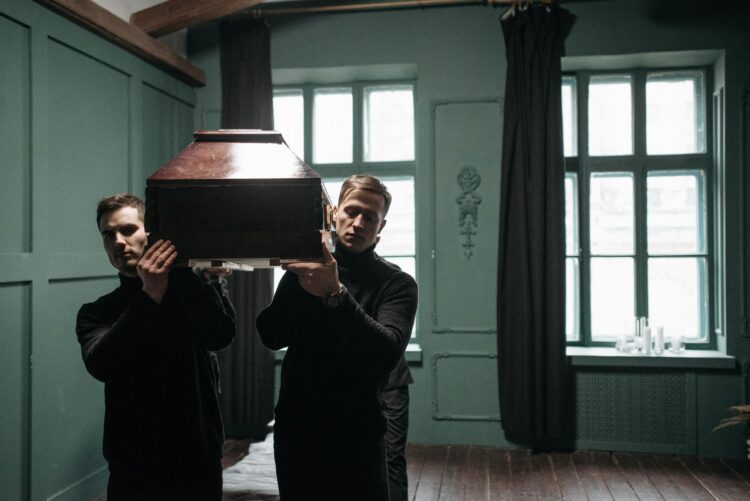
The coffin is resting on a structure called a catafalque, behind which are usually a set of discreet doors or a concealed mechanism. These lead directly into the crematory, the technical area where the cremation takes place. Once mourners have left the chapel, the coffin is respectfully moved by the crematorium technician, using a hydraulic trolley, through to a side room, where it will rest for a short while. At the local crematoria that we work with, Kent & Sussex Crematorium in Tunbridge Wells, this process is handled with the utmost care and dignity.
The first 24 hours
Wherever possible, cremation is carried out on the same day as the service which is standard practice at many crematoria. However, some facilities operate with a 24-hour window. If same-day cremation is not guaranteed, your funeral director, whether in Borough Green, Orpington and Chelsfield, Chislehurst and Bromley, Sevenoaks, Swanley, Tonbridge or Tunbridge Wells, will advise you at the time of arrangement.
Before cremation, a strict identification protocol is followed. A nameplate, secured to the coffin by the funeral director, is checked by crematorium staff upon arrival. If the name does not match official records, the cremation is refused.
Once the cremator is ready, this information is checked again by the technician, who will cross-reference at least three identifiers (such as name, age, and date of death). They then generate a unique ID card, which follows the coffin through the entire process.
The cremation itself takes about 90 minutes, after which the remains, still hot from being exposed to heat of around 900°c are moved temporary container beneath the cremator and left to cool for around 75 minutes.
The first week
Once cooled, the remains are processed by a piece of equipment called a cremulator, which separates out any remaining metal components, such as surgical pins or coffin nails, before reducing the remains into the familiar soft ash.
Any metals found are typically recycled, with any financial proceeds donated to charity. However, if you would prefer to retain them, let your funeral director know during the funeral planning stage.
The ashes are placed into a secure urn (usually cardboard these days for environmental reasons), which is what most families receive unless an alternative has been chosen prior to the service. This is a temporary, practical container, not designed for display or long-term use. If you’d like something more personal or decorative, you can choose an urn or an alternative memorial item.
Most crematoria will return ashes to your funeral director within a few days for no additional charge, who will then be in touch to arrange a suitable time for collection, or to discuss scattering or burial options.
You can explore your nearest cemeteries and crematoria here.
Common FAQs about cremations
Why do you use curtains at a funeral?
The curtains are largely symbolic, however, that does not mean they serve an important purpose in bringing closure to families. They represent the moment of committal; when we say, “earth to earth, ashes to ashes, dust to dust.” Some crematoria offer alternatives, such as a catafalque that lowers or a gate that closes.
Do I have to have the curtains close?
The curtains serve no practical purpose, and it is entirely up to you. Many families choose to leave them open, enjoying a final, quite moment with their loved one before saying goodbye. If you leave them open, you will walk away from the coffin. If they close, the coffin departs from you. It’s simply a personal preference that your funeral arranger can talk you through.
Can I be present when the coffin enters the cremator?
Yes, if arranged in advance. For some, it is a personal choice, however in some faiths, particularly Hindu and Sikh traditions, being present to witness the coffin entering the cremator (known as ‘charging’) is an important spiritual ritual. While not all crematoria offer this, many, including Bluebell Cemetery, can accommodate small groups upon request. Your funeral arranger can help you organise this in advance.
Why am I given an urn?
The urn provided is temporary, usually cardboard and not intended for display. Thus, as a standard, remains are transported in a temporary urn, unless a decorative urn is provided beforehand. This is because, while some families prefer to keep their loved one on display, many prefer to scatter or bury the ashes. However, it is important to remember that scattering and urns are not the only options; you’re welcome to choose from a wide range of personalised urns and keepsakes, or discuss scattering options with us.
Can I plan all of this in advance?
Many people find peace of mind in having these decisions made in advance. You can learn more about pre-paid funeral plans here.
If you’ve ever wondered what happens after the final curtain, we hope this has brought you some peace of mind.
If you’re looking for support planning a funeral, please contact us or visit one of our local branches in Borough Green, Orpington and Chelsfield, Chislehurst and Bromley, Sevenoaks, Swanley, Tonbridge or Tunbridge Wells.