Why Are There Two Death Certificates and What is the Difference Between Them?
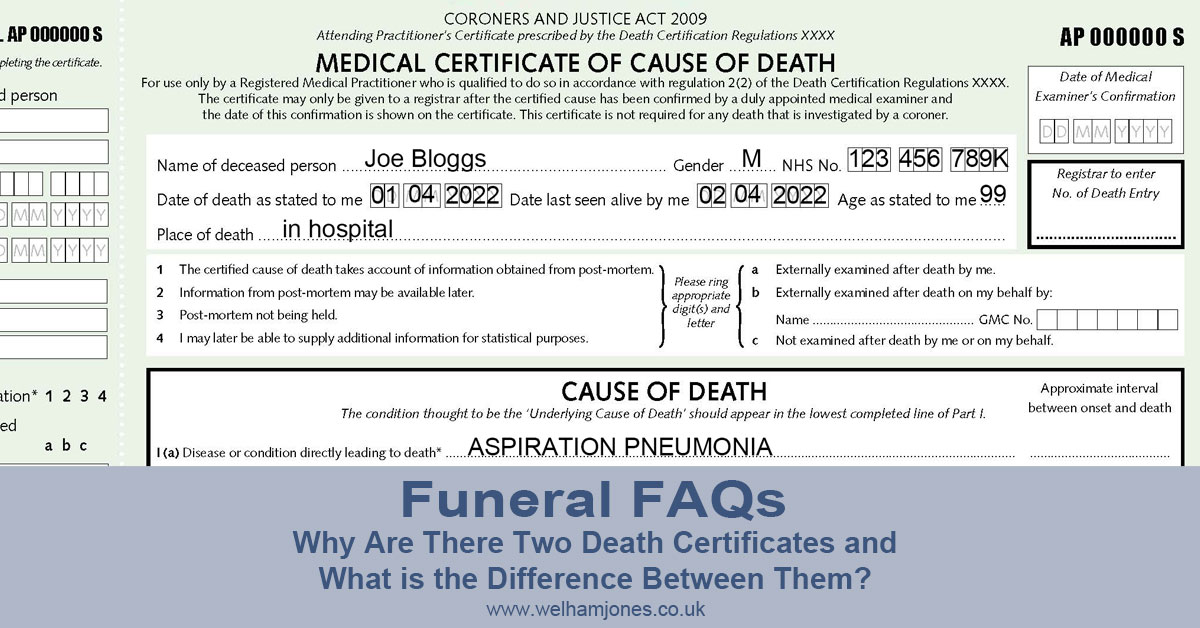
Why are there two death certificates, and what is the difference between them? We are often asked, one from the doctor and one from the registrar. I’m Simon Welham, I’m the owner and managing director of Welham Jones Funerals and Memorials here in Tunbridge Wells and across West Kent and south east London. Well, there aren’t two. The first one is from the doctor and it certifies the cause of death.
And it’s title is that full title is actually the Medical Certificate of Cause of Death or MCCD. That is passed either electronically or in paper form to the registrar who enters the cause of death and then the deceased into the register of deaths as part of the births marriages death procedure. He will issue you a certified copy of the entry of death.
And that is the piece of paper that you need to use for probate and other purposes. So there aren’t merely two death certificates they are both colloquially known as such, but they have different purposes and they come from different sources. So that’s Welham Jones Funerals and Memorials, help at an emotional time.
Are You Looking For a Local funeral director near you in or in the Sevenoaks area?
We are here to help you in your time of need, any time of day or night. 24/7, 7 days-a-week. We are here for you.
We have local funeral homes across west Kent and south east London.
As a family-run, independent funeral director with over 30 years’ experience, we have noticed the steady drift towards cremation when families are arranging a funeral. However, burial or cremation remains a deeply personal choice, so this guide will help you understand the differences, costs and considerations before you decide.
Meet Barry: Supporting families behind the scenes at your local funeral director
by Simon Welham
Choosing a funeral director in Borough Green, Orpington and Chelsfield, Chislehurst and Bromley, Sevenoaks, Swanley, Tonbridge or Tunbridge Wells means placing your trust in people who will care for your loved one with dignity at every step. By getting to know the team at Welham Jones, you can feel reassured that your funeral arrangements are guided by compassion, respect and genuine human understanding.
Local funeral director’s annual Easter egg appeal 2026
by Simon Welham
Every year, we host a number of food collections across our branches to support the communities we serve. Now, as we begin Lent, we are holding our annual Easter egg appeal to help supply food banks and hospices across West Kent and South East London.